The Monster
The Monster is a central concept in John Steinbeck's East of Eden, representing individuals born without the capacity for kindness, conscience, or moral choice. The novel's primary example is Cathy Ames, whose physical beauty masks a profound inner emptiness, making her a figure of pure, unthinking evil that serves as a foil to the human struggle for goodness.
Definition and Nature
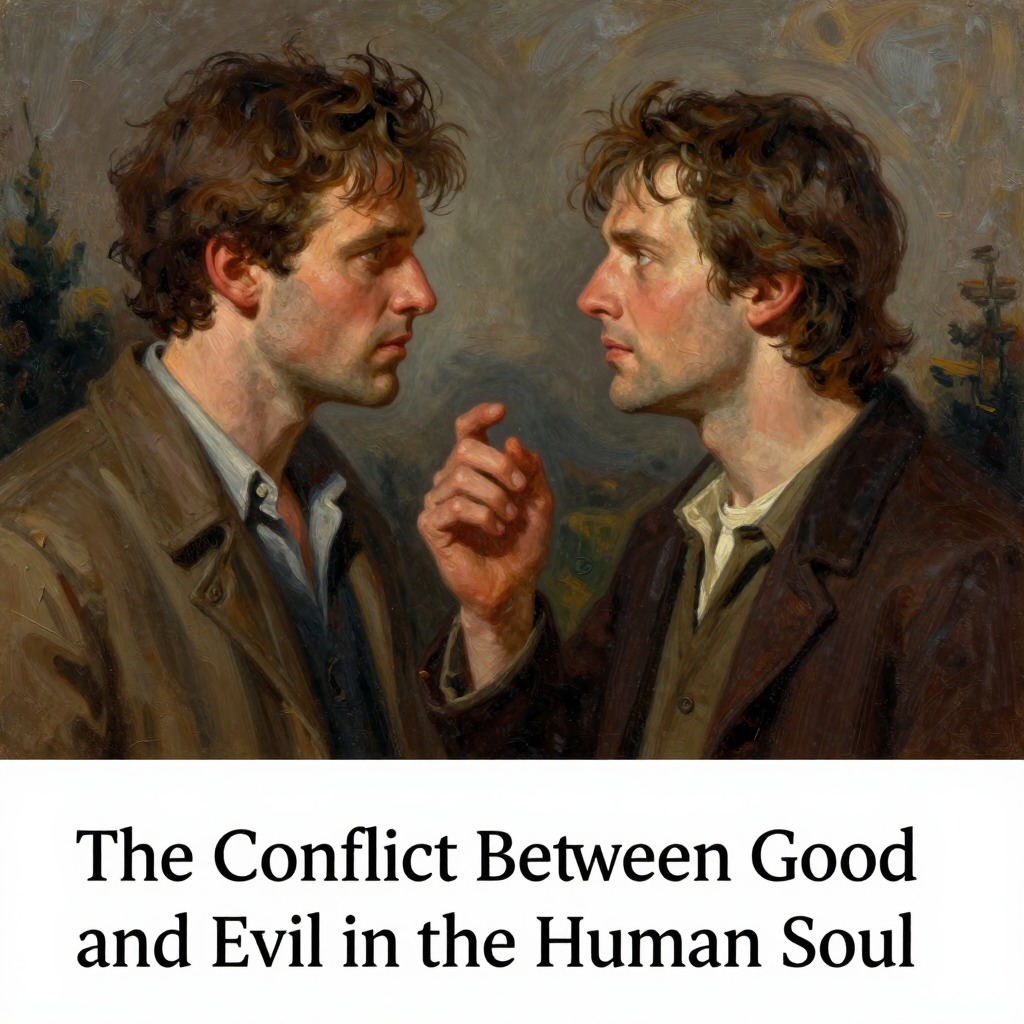
The novel introduces the Monster through a direct philosophical meditation, arguing that just as there are physical monsters born with misshapen bodies, there can be "mental or psychic monsters" whose souls are malformed from birth. The narrator states, "I believe there are monsters born in the world to human parents" and that a monster is simply a variation from the accepted normal, one who may be born "without kindness or the potential of conscience." To such a being, the norm itself appears monstrous, and a soul-stricken man must seem ridiculous to one born without a conscience. The Monster is not a product of environment or experience but an innate condition, a twisted gene or malformed egg producing a soul as deformed as a body without limbs.
Cathy Ames as the Embodiment
Cathy Ames is the novel's definitive Monster. The narrator asserts that she "was born with the tendencies, or lack of them, which drove and forced her all of her life" and that "some balance wheel was misweighted, some gear out of ratio." Her physical appearance is deceptively angelic—golden hair, wide-set hazel eyes, a rosebud mouth—but this innocence is a trap. She has a child's figure even as an adult, with undeveloped breasts and inward-turned nipples, and her ears press so close to her head they make no silhouette. Her voice can be irresistibly sweet or cut like a file. The narrator notes that in an earlier time, such a girl would have been called "possessed by the devil" and burned as a witch, for what cannot be forgiven a witch is her ability to distress people and make them uneasy.
The Monster's Psychology and Sexuality
Cathy's monstrosity is most evident in her cold, instrumental use of human sexuality. The novel explains that she learned very young that sexuality is the most disturbing human impulse and that by manipulating it she could gain power over nearly everyone. She felt contempt for those who were helpless before their own desires, and it is probable that she had very little of the impulse herself. The narrator reflects that without sexuality, one would not be human but a monster. Cathy's lies were never innocent; they were devices for profit or escape, and she developed the most effective method of lying by staying close enough to the truth so that one could never be sure. She knew two other methods: to interlard her lies with truth or to tell a truth as though it were a lie.
The Monster's Lack and the Human Contrast
In a climactic confrontation with Adam Trask, Cathy reveals the core of her monstrosity. Adam tells her, "You know about the ugliness in people. You showed me the pictures. You use all the sad, weak parts of a man, and God knows he has them. But you don't know about the rest. You don't believe I brought you the letter because I don't want your money. You don't believe I loved you. And the men who come to you here with their ugliness, the men in the pictures—you don't believe those men could have goodness and beauty in them. You see only one side, and you think—more than that, you're sure—that's all there is." He concludes that she is "only a part of a human" and wonders whether she ever feels that something invisible is all around her, which would be horrible if she knew it was there but could not see or feel it. This diagnosis is confirmed by her son Cal, who, after confronting her, realizes with relief that he does not have to be her: "I was afraid I had you in me. No, I haven't. I'm my own. I don't have to be you." The Monster, then, is defined not by its evil actions but by its incapacity for the full range of human experience—love, trust, and the perception of goodness in others.